"Bringing Community and Businesses together"
Listening…
Currently searching businesses · ALICE AI search coming soon
ALICE — your Palm Coast AI guide — is almost here
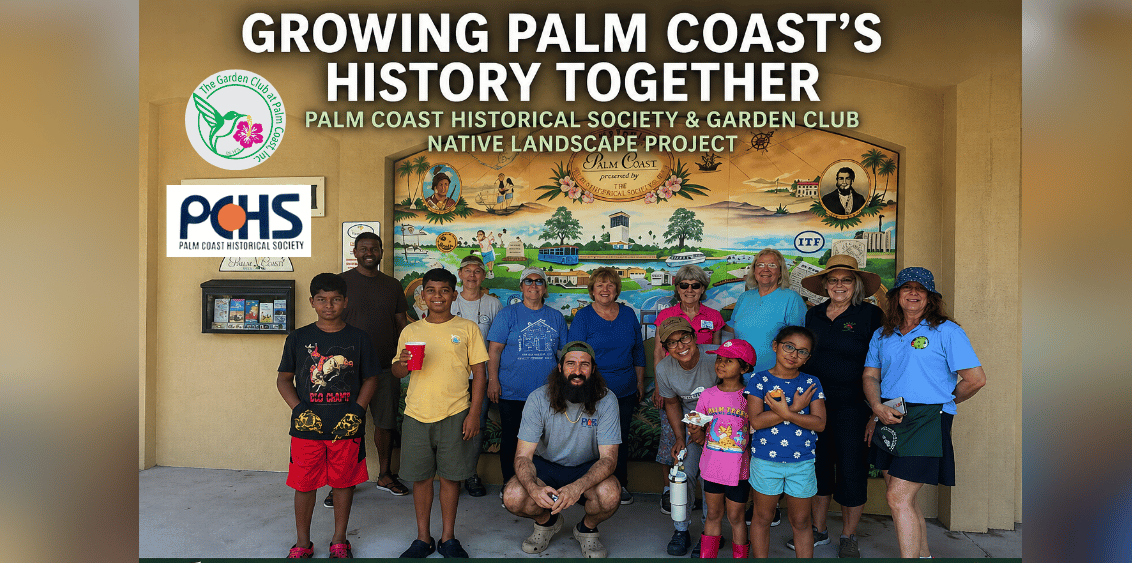
The Palm Coast Historical Society and the Garden Club at Palm Coast joined forces to revitalize the museum entrance with a beautiful Florida native landscape project. This community collaboration brought together volunteers, gardeners, and history enthusiasts to create a welcoming entrance that celebrates Floridas natural heritage while beautifying one of Palm Coasts most important cultural landmarks.
On April 25, 2026, the Palm Coast Historical Society & Museum, alongside the Garden Club at Palm Coast and the Jr. Garden Club, came together to transform the entrance of the museum using Florida native plants. The project involved planting Florida native species at the museum entrance while engaging Jr. Garden Club participants in hands-on learning, focusing on improving the appearance of the property while supporting sustainable landscaping practices suited to the local environment.
This collaborative effort brought together multiple generations of community members, combining hands-on learning with local history, as Jr. Garden Club participants worked alongside experienced gardeners and community leaders.
The landscaping project introduced a variety of Florida native plants selected for their ability to thrive in the local climate while enhancing the natural beauty of the museum entrance.
Plants installed during the revamp included Saw Palmetto, Coral Bean (also known as Cherokee Bean), Native Petunia, Black-eyed Susan, Adam’s Needle, Tropical Sage, Coontie, Blanket Flower, and Beach Verbena.
These native species will continue to grow and mature over the coming months, creating a welcoming and environmentally friendly entrance that reflects the natural landscape of Florida.
The event brought together a strong group of community members and organizations, all working side by side in support of the project.
In attendance were Palm Coast Historical Society President Peter Johnston, along with community supporters including Dalia Maiato, Margaret Johnson, and Celena Zimmerman with Flora of Flagler Native Plants. Members of the Garden Club at Palm Coast were actively involved, with Sharaz and fellow members Marg John, Kenetha Kilmurray, Kathleen Fuss, Melondy Bosko, and Nanci Iandoli joining in the planting efforts.
Jr. Garden Club participants played a key role in the project, digging, planting, and learning alongside experienced volunteers. The day was filled with shared stories, teamwork, and a sense of community, with refreshing lemonade adding to the welcoming atmosphere.
The use of Florida native plants is a key component of sustainable landscaping. These plants are naturally adapted to the region’s climate, requiring less water and maintenance while supporting local wildlife and ecosystems.
By choosing native species, the project not only enhances the visual appeal of the museum but also contributes to long-term environmental health and conservation.
The Palm Coast Historical Society & Museum documents the origins and growth of Palm Coast, from its earliest planning through the development of the modern city.
Through photographs, artifacts, printed materials, and personal accounts, the museum preserves the everyday history of Palm Coast—how residents lived, worked, governed, and built a new community.
The museum emphasizes local experience over abstraction, focusing on the people, places, and decisions that shaped Palm Coast during its formative years. Exhibits reflect residential life, recreation, civic organization, and the cultural identity that emerged as the city took shape.
This project represents more than a landscape improvement—it reflects a continued investment in preserving and enhancing local community spaces.
By combining historical preservation with environmental awareness, the collaboration between the Palm Coast Historical Society, Garden Club, and Jr. Garden Club highlights how local organizations can work together to create meaningful and lasting impact.
As the plants grow and fill in over time, the entrance to the museum will evolve into a living representation of Florida’s natural environment, welcoming visitors while honoring the area’s history.
The Palm Coast Historical Society & Museum preserves the history of Palm Coast through exhibits, artifacts, and local stories. It is located in Holland Park at 18 Florida Park Drive, Palm Coast, FL, where visitors can explore the origins and development of the city.
The Garden Club at Palm Coast focuses on horticulture, education, and community beautification projects, promoting sustainable landscaping and environmental awareness throughout the local community.
The Jr. Garden Club is an extension of the Garden Club at Palm Coast that introduces students and children to plants, gardening, and environmental stewardship. Through school-based activities and hands-on experiences, participants learn about plant care, sustainability, and the importance of protecting Florida’s natural environment.
Add comment