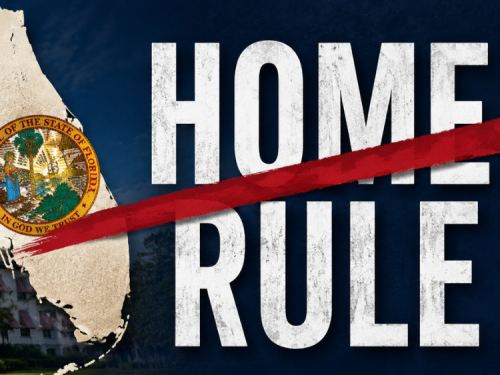
Why Florida’s Home Rule Powers May No Longer Mean What They Once Did
Across Florida, residents are increasingly hearing local officials say something many people never expected:
“Our hands are tied.” “The state changed the law.” “We no longer have authority over that issue.”
For decades, Florida communities operated under what is known as “Home Rule” — the idea that local governments should have the ability to make decisions for their own communities without constantly needing approval from the state legislature.
But in recent years, many Floridians have started asking an important question:
Does Home Rule in Florida still work the way people think it does?
The answer is complicated.
What Is Home Rule in Florida?
Home Rule is the legal authority that allows cities and counties to govern local matters themselves.
In theory, it gives local governments flexibility to address issues unique to their communities, including zoning and development, local permitting, environmental protections, growth management, infrastructure planning, parking rules, and business regulations.
The idea behind Home Rule is simple: Local governments are closest to the people and often understand their community’s needs better than officials in Tallahassee.
Florida’s modern Home Rule powers were strengthened through the Florida Constitution, giving counties and municipalities broader authority over local affairs.
But there is an important catch.
Home Rule Is Not Absolute
Even though local governments have authority, the state government still holds the ultimate constitutional power.
That means the Florida Legislature can override local authority through what is known as “state preemption.”
Preemption happens when the state decides certain issues should be controlled uniformly across Florida instead of allowing every county or city to create different rules.
In simple terms: The state can step in and say, “This issue is no longer up to local governments.”
That reality was recently highlighted again through newly signed Florida legislation involving development and infrastructure authority.
For many residents and local officials, laws like these have renewed questions about how much authority local governments still have when state lawmakers decide an issue is important to Florida’s broader economic or infrastructure goals.
And that is exactly where much of today’s debate is happening.
Why More Floridians Are Hearing “The State Won’t Let Us”
Over the past several years, Florida has increasingly expanded state-level control over issues that were once largely handled locally.
Examples include: development and permitting rules, vacation rental regulations, energy and utility infrastructure, environmental oversight, housing policies, data center and infrastructure projects, and workforce-related regulations.
As a result, local governments across Florida are finding themselves with less flexibility in certain areas than they once had.
For residents, this often creates confusion.
Many people assume county commissions or city councils have the final say over what happens locally — until officials publicly explain that state law now limits what they can regulate.
Supporters Say Florida Needs Consistency
Supporters of stronger state oversight argue that Florida’s rapid growth requires faster and more consistent decision-making across the state.
They often point to housing shortages, infrastructure expansion, utility reliability, economic development, broadband growth, and large-scale investment projects.
The argument is that businesses and developers should not face drastically different regulations in every local jurisdiction.
Supporters also say statewide consistency helps Florida remain economically competitive.
Critics Say Communities Are Losing Their Voice
Critics argue that increased state preemption weakens the original purpose of Home Rule.
Their concern is not always about one specific project or law.
Instead, many worry about a larger shift: that local communities are gradually losing the ability to shape their own future.
Some local officials and residents argue that infrastructure varies widely from county to county and that growth impacts involving traffic, drainage, utilities, emergency planning, and environmental concerns are often unique to each community.
Critics also point out that residents frequently direct frustrations toward local governments, even when those local governments no longer have legal authority over the issue being debated.
Why This Debate Is Growing Across Florida
Florida is changing rapidly.
Population growth, infrastructure demands, housing pressure, technology expansion, and large-scale development projects are placing increasing pressure on both local and state governments.
At the same time, residents are becoming more aware of how often local authority is being limited or overridden by state law.
That growing awareness is why “Home Rule” has become a larger public conversation in communities throughout Florida.
For many residents, the issue is no longer just political.
It is becoming personal.
People want to know: Who actually decides what happens in their community?
And increasingly, the answer may not be local government alone.
What This Could Mean Going Forward
Home Rule still exists in Florida.
Cities and counties still maintain significant authority over many local matters.
But the balance between local control and state oversight is clearly changing.
The larger question many Floridians are now asking is not whether Home Rule exists — but how much local control remains when the state can increasingly override decisions on issues it considers important statewide concerns.
As Florida continues to grow, that debate is likely to become even more visible in conversations surrounding development, infrastructure, environmental policy, housing, technology expansion, and the future direction of local communities themselves.
Frequently Asked Questions About Home Rule in Florida
What does Home Rule mean in Florida?
Home Rule allows local governments, including cities and counties, to create and enforce local ordinances without needing approval from the state legislature for every decision.
Can the State of Florida override local governments?
Yes. Florida can override local governments through state preemption laws when the legislature decides an issue should be regulated statewide.
Does Home Rule still exist in Florida?
Yes, but many local officials and residents believe state preemption has reduced local authority in several major areas.
What is state preemption?
State preemption occurs when Florida law limits or removes the authority of local governments to regulate certain issues independently.
Why are local governments saying their hands are tied?
In some cases, local officials may be restricted by state laws that prevent cities or counties from regulating certain issues the way they once could.
Can counties stop large developments in Florida?
It depends on the project and applicable state laws. Some developments remain under local control, while others may involve state-level authority or limitations on local regulation.
Why is Home Rule becoming a bigger topic in Florida?
Rapid growth, infrastructure expansion, housing pressures, and statewide economic policies are increasing debates over how much authority local governments should retain.
What is the difference between local control and state preemption?
Local control allows cities and counties to make decisions for their own communities, while state preemption allows the state government to override or limit those local decisions.
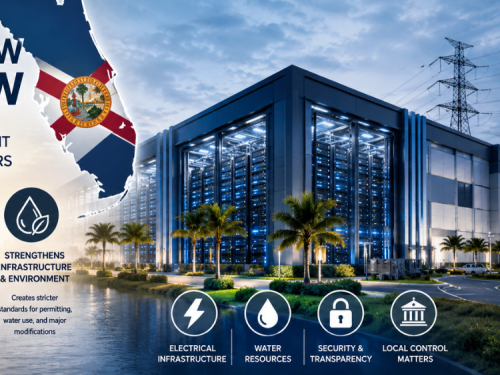
Florida’s New SB 484 Law Gives Communities More Control Over Hyperscale Data Centers
Florida has officially signed a new law aimed at regulating hyperscale data centers, and the impact could reach communities across the state as concerns continue growing over infrastructure, electricity demand, water consumption, and rapid industrial development.
On May 7, 2026, Ron DeSantis signed Senate Bill 484 into law in Lakeland. The legislation focuses on protecting ratepayers, preserving local government authority, increasing transparency, and addressing environmental concerns tied to large-scale data center projects.
The law comes at a time when states across the country are seeing explosive growth in artificial intelligence infrastructure, cloud computing facilities, and large-scale digital storage operations.
For many Florida residents, SB 484 may become one of the most important laws shaping future conversations about development, utilities, water resources, and local control.
What Is a Hyperscale Data Center?
Hyperscale data centers are extremely large facilities designed to process, store, and distribute massive amounts of digital information.
These facilities support:
Artificial intelligence systems
Cloud computing platforms
Streaming services
Search engines
Social media networks
Government and enterprise data systems
Unlike smaller server facilities, hyperscale data centers often require:
enormous electricity usage,
significant water consumption for cooling,
expanded utility infrastructure,
and large amounts of land.
As demand for AI and cloud services grows, more communities across the United States are debating how these facilities should be regulated.
What Florida’s SB 484 Changes
The new law creates additional protections and rules surrounding hyperscale data center development in Florida.
According to the state, the legislation is designed to:
protect residential utility customers,
preserve local zoning authority,
strengthen environmental oversight,
and prevent infrastructure costs from shifting onto taxpayers and small businesses.
The law also establishes clearer legal definitions for hyperscale data centers and creates a more structured permitting process.
One of the Biggest Changes: Local Governments Keep Control
One of the most significant parts of SB 484 is that it preserves local government authority over data center approvals.
Under the law:
Cities and counties can still deny projects
Local governments may establish stricter standards
Communities retain authority over zoning and land-use decisions
That provision is important because many states have recently faced criticism for limiting local control over major industrial or infrastructure projects.
Florida’s new law moves in the opposite direction by reinforcing community decision-making power.
For residents concerned about rapid development, infrastructure strain, or environmental impacts, this may become one of the most closely watched parts of the legislation.
Florida Is Also Targeting Utility Cost Concerns
Another major focus of SB 484 involves electricity and utility costs.
Large-scale data centers can consume enormous amounts of power, and some states have faced criticism after utility infrastructure costs were indirectly passed onto residential customers.
Florida’s new law prohibits utilities from shifting data center-related costs onto:
residential ratepayers,
and small businesses.
Instead, hyperscale operators are expected to cover the full cost of service tied to their facilities.
Supporters argue this helps protect homeowners and smaller businesses from subsidizing major industrial projects through higher utility bills.
Water Usage and Environmental Concerns Are Becoming a Bigger Debate
As hyperscale facilities expand nationwide, water consumption has become a growing issue.
Large data centers often require extensive cooling systems, particularly in warm climates like Florida.
SB 484 addresses this by:
strengthening permitting standards,
allowing reclaimed water options,
and requiring major facility modifications to go through new review processes.
Environmental concerns surrounding data centers have increasingly focused on:
water demand,
power generation,
heat production,
land consumption,
and infrastructure expansion.
Florida lawmakers say the new law helps protect natural resources while still allowing responsible development.
Why This Matters Beyond Technology
Even residents who never think about data centers could eventually feel their impact.
Large-scale facilities can influence:
utility infrastructure,
electrical grid demand,
land development,
road expansion,
water systems,
and industrial zoning discussions.
As artificial intelligence and cloud computing continue expanding, many communities are beginning to realize that digital infrastructure still requires significant physical infrastructure behind the scenes.
SB 484 reflects growing concerns nationwide about how communities balance technology growth with environmental protection and local oversight.
Florida’s Data Center Debate May Just Be Beginning
Florida has already seen growing conversations surrounding:
hyperscale development,
industrial growth,
AI infrastructure,
and energy demand.
Some communities view data centers as economic opportunities.
Others worry about:
water consumption,
electrical strain,
tax incentives,
industrial expansion,
and long-term infrastructure impacts.
SB 484 suggests Florida lawmakers expect these debates to continue growing in the years ahead.
Read How Florida’s New HB 927 Law Could Speed Up Permits and Development Across Local Communities: Palm Coast Local HB 927 Article
Frequently Asked Questions About Florida SB 484
What is Florida SB 484?
SB 484 is a new Florida law signed in May 2026 that regulates hyperscale data centers and adds protections involving utilities, environmental concerns, and local government authority.
What is considered a hyperscale data center?
A hyperscale data center is a very large facility used to support cloud computing, artificial intelligence, streaming platforms, and massive digital storage operations.
Can local governments still reject data center projects?
Yes. The law specifically preserves local zoning and permitting authority, allowing cities and counties to deny projects or establish stricter standards.
Will residential utility customers pay for data center infrastructure?
According to the law, utilities cannot pass hyperscale data center costs onto residential or small business customers.
Why are people concerned about water usage?
Large data centers often require extensive cooling systems that can consume significant amounts of water, especially in warmer climates.
Could this impact electricity demand in Florida?
Potentially. Hyperscale data centers can use enormous amounts of electricity, which may require additional grid infrastructure and power generation capacity.
Does SB 484 stop data centers from being built in Florida?
No. The law does not ban data centers. It creates regulations and protections surrounding how they are approved, permitted, and serviced.
Why is artificial intelligence connected to data center growth?
AI systems require massive computing power and storage capacity, increasing demand for hyperscale infrastructure nationwide.
Could data centers affect local development patterns?
Yes. Large facilities can influence industrial zoning, infrastructure expansion, utility planning, and surrounding land development.
What is reclaimed water and why does the law mention it?
Reclaimed water is treated wastewater reused for non-drinking purposes such as cooling systems or irrigation. The law allows reclaimed water to be considered during permitting processes.
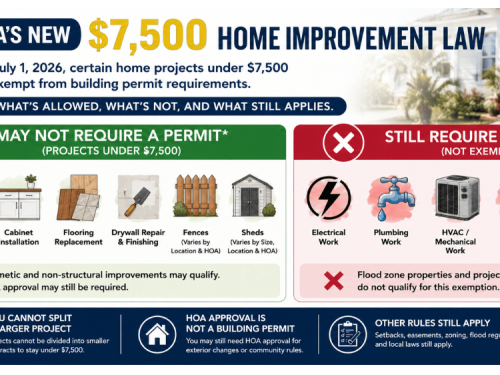
Florida’s newly signed House Bill 927 is one of those laws that may not sound dramatic at first glance — but it could significantly reshape how development happens across cities and counties throughout the state.