🌡️Loading conditions… 💨Wind — 🌊Surf — 🌊Tide — 🌅— 🌙— 🕐--:--

🔍 Sammy Quick Search — businesses & events
🎙️ Listening…

Breaking
◆Loading today's Palm Coast news…
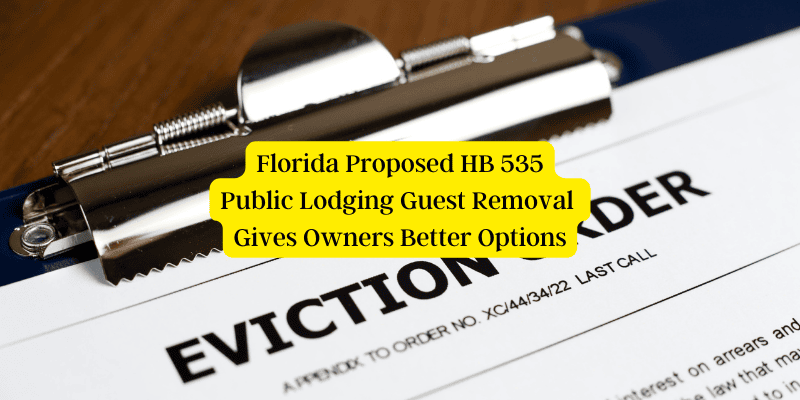
In Part 1 of HB 535, we examined the proposed changes to food service gratuity laws. Now, in Part 2, we will focus on the public lodging provisions outlined in the bill. This section details proposed updates to guest removal policies, notification requirements, and penalty provisions for public lodging establishments. These changes aim to clarify regulations, enhance transparency, and ensure fair treatment for both businesses and guests.
In Part 1 of HB 535, we examined the proposed changes to food service gratuity laws. Now, in Part 2, we will focus on the public lodging provisions outlined in the bill. This section details proposed updates to guest removal policies, notification requirements, and penalty provisions for public lodging establishments.
Public lodging refers to businesses that provide temporary accommodations to guests and are open to the general public. These establishments operate under Florida state regulations to ensure guest safety, fair business practices, and compliance with hospitality industry standards. Examples of public lodging establishments under Florida law include:
Unlike private residences or membership-based lodging clubs, public lodging establishments must adhere to specific rules regarding guest accommodations, removal procedures, and service charges, as outlined in HB 535.
One of the key updates in HB 535 is the revision of notification requirements for removing guests from public lodging and food service establishments. These changes clarify when and how businesses can remove guests, ensuring transparency and legal compliance while protecting both business owners and patrons.
Currently, individuals claim they have no place to go and use public lodging as their sole residence, which has allowed them to avoid immediate removal. This has forced businesses into an eviction notice process before they can lawfully remove a guest. HB 535 eliminates this requirement, granting public lodging establishments greater authority to remove non-compliant guests without having to go through formal eviction proceedings.
Clearer Guidelines for Removal – The bill establishes more defined procedures that businesses must follow before removing a guest. This prevents arbitrary removals and ensures guests understand the reasons for their dismissal.
Enhanced Notification Requirements – Public lodging and food service establishments must provide proper notice to guests before removal. This may include written or verbal warnings, posted policies, or notifications on receipts and agreements.
Legal Protections for Businesses – The revised provisions help businesses enforce their rules while reducing liability. By following standardized notification procedures, establishments can protect themselves from disputes or legal challenges.
Trespassing Enforcement – Guests who remain on the property after being asked to leave may be considered trespassers under Florida law. Law enforcement has the authority to issue trespassing citations or make arrests if necessary.
Business Protection from Liability – If law enforcement is called to remove a guest, the business owner or manager is generally protected from legal claims, provided they followed proper notification procedures. This reduces the risk of lawsuits or disputes.
Streamlined Process for Public Safety – By allowing law enforcement to act swiftly, HB 535 ensures that disruptive or non-compliant guests can be removed without unnecessary delays, maintaining a safe and professional environment for other guests and staff.
An important aspect of HB 535 is the provision to downgrade certain arrests if law enforcement is required to step in. This means that instead of immediately facing severe criminal charges, individuals who refuse to leave may be subject to lesser penalties, such as a civil citation or misdemeanor trespassing charge rather than a more serious offense.
Prevents Unnecessary Criminal Records – Downgrading the charge helps prevent individuals from facing long-term consequences for what may be a misunderstanding or minor non-compliance issue.
Reduces Burden on the Criminal Justice System – By treating these incidents as lower-level offenses, law enforcement can focus on more serious crimes, easing the strain on courts and jails.
Encourages Compliance Without Severe Punishment – Guests may be more willing to comply if they know they won’t immediately face harsh penalties. This approach balances accountability with fairness.
Protects Businesses Without Overcriminalizing Guests – While businesses have the right to enforce policies, this provision ensures that guests are not excessively penalized for failing to leave in a timely manner.
By including this downgrade provision, HB 535 promotes fairness while still allowing businesses and law enforcement to maintain order and safety.
Effective Date if Passed: 7/1/2025
Last Action: 3/17/2025 House - Now in Criminal Justice Subcommittee
You can follow the bill here: https://www.flsenate.gov/Session/Bill/2025/535/