PSA: From the City of Flagler Beach
Residents in Flagler Beach are once again being reminded that what goes down household drains and toilets can have a major impact on the city’s sewer system and infrastructure.
Grease, oils, food waste, wipes, and other materials continue to create costly sewer blockages and backups in communities across Florida and nationwide. Public works officials regularly encourage residents to take simple preventative steps at home to help reduce clogged sewer lines, emergency maintenance, unpleasant odors, and costly repairs.
While many products are advertised as “flushable,” city utilities departments across the country continue warning that many of these materials do not properly break down in sewer systems and can combine with grease and debris to form major obstructions.
Officials say the goal is simple: protect homes, protect infrastructure, and help keep wastewater systems flowing properly.
The Top Items That Commonly Cause Sewer Line Clogs
Here are some of the most common offenders public utilities departments warn residents about:
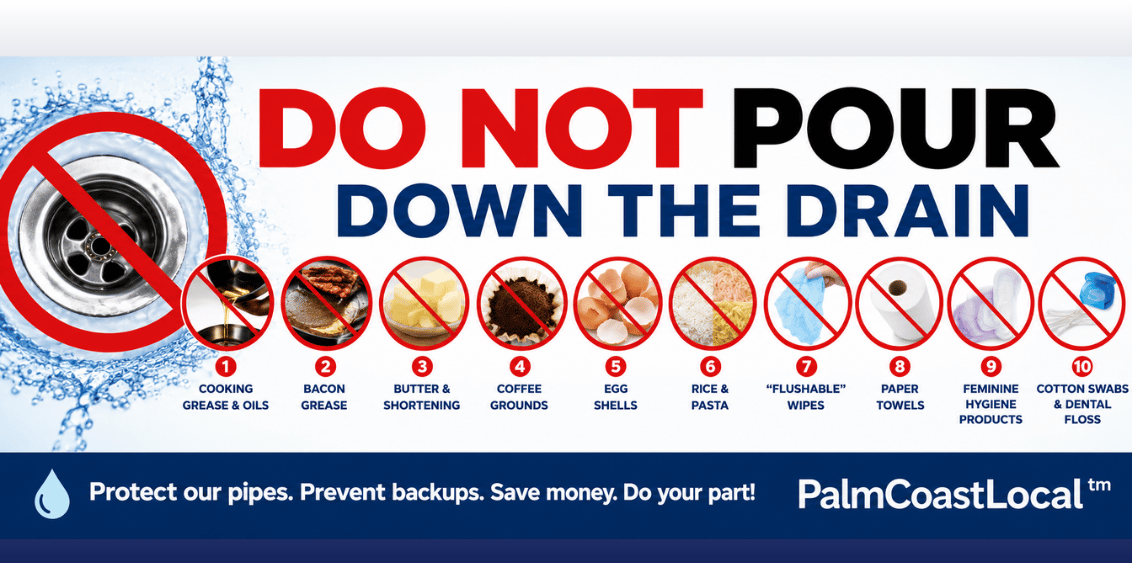
- Cooking grease and oils
- Bacon grease
- Butter and shortening
- Coffee grounds
- Egg shells
- Rice and pasta
- “Flushable” wipes
- Paper towels
- Feminine hygiene products
- Cotton swabs and dental floss
Even small amounts of grease can harden inside sewer pipes over time. When combined with wipes and debris, the buildup can eventually restrict or completely block wastewater flow.
What Residents Can Do Instead
Utilities departments recommend a few easy habits that can make a big difference:
- Allow grease to cool and dispose of it in a sealed container
- Scrape food scraps into the trash before rinsing dishes
- Use sink strainers to catch debris
- Only flush toilet paper
- Dispose of wipes, paper towels, and hygiene products in the trash
- Avoid pouring oils or fats into garbage disposals
These small actions help reduce stress on sewer infrastructure and can also help homeowners avoid costly plumbing repairs.
A Shared Community Responsibility
City sewer systems are designed to handle wastewater — not grease, wipes, or food waste. Infrastructure maintenance and emergency response can become expensive for municipalities when preventable clogs occur.
Public awareness campaigns like this are intended to encourage residents to work together in protecting the system everyone relies on daily.
By making a few thoughtful changes at home, residents can help reduce sewer backups, overflows, and maintenance issues throughout the community.