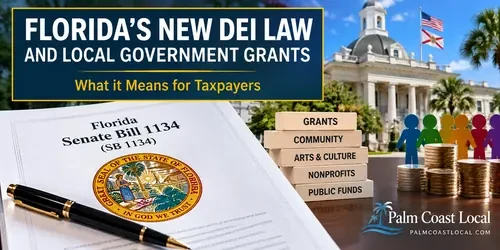
Florida's New DEI Law: What SB 1134 Means for Local Government Grants and Taxpayer Funding
Florida Governor Ron DeSantis signed Senate Bill 1134 (SB 1134) into law in 2026, establishing new restrictions on how Florida counties and municipalities may use public funds to support diversity, equity, and inclusion (DEI) initiatives. Effective January 1, 2027, the legislation limits certain government programs, policies, grants, contracts, and expenditures. It does not eliminate local government grants but restricts activities that fall within the law's definition of DEI.
Local governments regularly allocate public funds to grants supporting nonprofit organizations, community programs, arts and cultural activities, and other initiatives. These grants may be funded through property taxes, other local tax revenues, or government funding sources. Although spending is generally approved through public budgeting processes, residents may not always know which organizations receive grants or how those funds are used.
Two Important Questions About Florida's New DEI Law
What does DEI stand for?
DEI stands for Diversity, Equity, and Inclusion. Diversity refers to differences among people. Equity generally concerns barriers to opportunity, while inclusion focuses on participation and representation. The new Florida law uses its own specific legal definition to identify the activities it restricts.
Does Florida's new DEI law eliminate taxpayer-funded grants?
No. Local government grants may continue, but counties and municipalities cannot fund or promote activities prohibited by the law. Certain grant and contract recipients must also certify that local government funds will not be used for specified DEI-related instruction or materials.
Understanding Florida Senate Bill 1134
Officially titled Official Actions of Local Governments, SB 1134 creates new sections of Florida law governing DEI-related actions by counties and municipalities.
The legislation addresses local government programs and policies, DEI offices and personnel, public expenditures, and the use of funds by certain outside organizations.
How Does Florida Define DEI?
The law defines DEI for purposes of its restrictions. The definition includes certain efforts to:
- Influence employee composition based on specified characteristics, except as needed to comply with antidiscrimination laws.
- Provide preferential treatment or special benefits based on characteristics such as race, color, sex, ethnicity, gender identity, or sexual orientation.
- Promote or adopt training, programming, or activities designed or implemented with reference to those characteristics.
The statute excludes equal opportunity and equal employment opportunity materials that explain protections against unlawful discrimination.
These definitions matter because the law regulates specific activities rather than simply the appearance of the term DEI in an organization's name or description.
How Taxpayer-Funded Grants Are Affected
Cities and counties may provide financial assistance to outside organizations through government grants. These awards can support community services, nonprofit programs, economic development, arts, cultural activities, and other public purposes.
Even when a recipient is privately operated, government grant money remains subject to applicable public funding restrictions and grant conditions.
Restrictions on Public Funding
Beginning January 1, 2027, counties and municipalities are prohibited from directly or indirectly funding or promoting DEI initiatives as defined by SB 1134.
The law also prohibits local governments from providing or authorizing their funds to be used by employees, contractors, volunteers, vendors, or agents to promote covered DEI initiatives.
What matters for taxpayers: The restrictions can extend beyond programs operated directly by a city or county. Certain uses of public money by outside organizations are also covered.
A grant's description as an arts, cultural, educational, or community program does not, by itself, determine whether a particular expenditure complies with the law. The funded activity and applicable statutory provisions are what matter.
SB 1134 does not establish a blanket ban on nonprofit, arts, cultural, or educational grants.
Grant and Contract Certifications
SB 1134 creates Section 287.139 of the Florida Statutes. It requires potential recipients of county or municipal contracts or grants to certify, before an award, that they do not and will not use county or municipal funds to require employees, contractors, volunteers, vendors, or agents to ascribe to, study, or receive instruction using materials relating to DEI as defined by the statute.
The legislation also specifies when the contract-related provisions apply, including rules for contracts executed or renewed after January 1, 2027.
Readers can review the exact language in the official enrolled text of SB 1134 .
What Else Does the Law Restrict?
Beyond grants and contracts, SB 1134 prohibits counties and municipalities from using funds, regardless of source, to establish, maintain, support, or staff DEI offices or engage DEI officers as defined in the legislation.
It also restricts official actions involving covered DEI-related ordinances, resolutions, regulations, programs, and policies. Existing measures falling within these prohibitions are declared void.
The legislation contains specific exceptions, including actions required by state or federal law and certain recognized holidays, observances, historical activities, and other expressly permitted purposes. Consequently, not every cultural or historical recognition activity is prohibited.
Accountability and Enforcement
SB 1134 includes enforcement provisions for counties, municipalities, and covered public officials.
Under the law, a county or municipal official who violates the applicable restrictions while acting in an official capacity commits misfeasance or malfeasance in office. These legal terms concern improper or wrongful conduct involving official duties.
The legislation also allows a resident to bring an action in circuit court against a county or municipality that violates the relevant provisions. A court may award declaratory or injunctive relief, damages, and costs.
What This Means for Florida Taxpayers
Beginning January 1, 2027, Florida cities and counties will operate under new legal restrictions concerning DEI-related activities and public expenditures.
The legislation does not eliminate local government grants or automatically disqualify nonprofit organizations, arts programs, or cultural initiatives from public funding.
Instead, it establishes limits on specified uses of government resources, including certain activities supported through grants and contracts. For taxpayers, the change concerns how public dollars may legally be allocated and used.
Frequently Asked Questions
Can nonprofit organizations still receive taxpayer-funded grants?
Yes. SB 1134 does not prohibit organizations from receiving government grants simply because they are nonprofits. Applicable restrictions govern how public funds may be used.
Are arts and cultural grants prohibited?
No. Arts and cultural grants are not categorically prohibited. However, funded activities must comply with the statute, which also expressly permits certain historical and cultural recognition activities.
Can cities and counties continue operating DEI offices?
The law prohibits counties and municipalities from using funds, regardless of source, to establish, maintain, support, or staff DEI offices or engage DEI officers as defined by the statute.
Does the law apply to privately funded organizations?
SB 1134 primarily regulates counties, municipalities, and specified uses of their funds. It does not generally prohibit independent, privately funded DEI activities. Other applicable laws may still apply.
Can local governments comply with federal antidiscrimination laws?
Yes. SB 1134 preserves official actions required to comply with applicable state or federal laws and regulations, including the use of specified equal opportunity materials.
What happens if a city or county violates the law?
A resident may bring a legal action against a county or municipality under the statute's enforcement provisions. The law also addresses misconduct by covered officials acting in an official capacity.
When does Florida Senate Bill 1134 take effect?
January 1, 2027. The legislation also contains specific applicability provisions for certain contracts.